在跑通 H3 之后,继续拆解官方提示词规范和八类内容 Skill,用简易案例说明适用场景、输入模式与减少无效生成的方法。After the first successful run, examine the official prompt rules and eight content skills through simple examples, input modes, and ways to reduce wasted generations.
面向新手说明如何检查硬件、选择本地或云端环境,并在 ComfyUI 中从官方 MiniMax H3 模板开始生成第一条带声音的视频。A beginner guide to checking hardware, choosing local or cloud execution, and generating a first video with audio from the official MiniMax H3 templates in ComfyUI.
AI 人物的真实感不只来自毛孔与瑕疵,更取决于人物、场景、镜头、动作和生活痕迹是否共同成立。Believable digital humans depend on more than pores and imperfections; the person, setting, camera, motion, and traces of lived experience must agree.
把文章逻辑直接转成黑底霓虹绿节点拓扑,再配上 HUD 边框、数据面板和系统状态行,形成统一的赛博终端示意图。Turn an article’s logic into a neon-green node topology on black, framed by HUD panels, data readouts, and system status lines.
面向零基础梳理 FDE 的三条入行路径、能力清单、面试准备与真实工作体验,帮助判断这个岗位是否适合自己。A beginner roadmap to forward deployed engineering covering three entry paths, the core skill set, interview preparation, and the realities of the role.
FDE 是真正推动 AI 落地的前线工程师,还是换名后的驻场外包?通过岗位职责、授权范围与交付方式识别两者差异。Is a forward deployed engineer truly responsible for putting AI into use, or is the role merely renamed on-site outsourcing? Distinguish them through scope, authority, and delivery.
用简单物件、克制配色、自然阴影和轻微手工质感,把文章主题转译成安静治愈的静物封面与配图。Translate an article into calm still-life visuals through simple objects, restrained color, natural shadows, and a lightly handcrafted texture.
把人物压缩成简洁色面,用夸张比例、克制配色与细密颗粒重绘为具有手工感的纹理平面人像,并附提示词与 Skill。Reduce a portrait to simple color planes, then use exaggerated proportions, restrained palettes, and fine grain to create a tactile flat illustration.
从成本、错误风险、客户体验、部署投入和团队培训五个常见顾虑出发,解释中小企业与社区运营该怎样务实引入 AI 客服。A practical response to five common concerns about AI customer service: hidden cost, errors, customer experience, deployment effort, and team training.
从黄仁勋倡议开放权重模型的公开叙事出发,分析算力、基础设施与生态利益如何共同塑造“世界需要开源模型”这句话。Starting from Jensen Huang’s case for open-weight models, this article examines how compute, infrastructure, and ecosystem incentives shape the narrative that the world needs open models.
从梁文锋近四小时交流中的一连串“不做”提炼出五个决策问题,用一条主线判断新机会是否真正值得投入。Distill a long conversation and its repeated refusals into five practical questions for judging whether a new opportunity strengthens the one main line that matters.
从 Loop Engineering 走向 Graph Engineering:把复杂任务拆成可并行、可汇合、可检查的多 Agent 图结构,并附可直接使用的分工模板。Move from loops to graphs by splitting complex work into parallel, mergeable, and reviewable agent tasks, with a reusable delegation template.
利用高饱和前进色与低存在感后退色的视觉差,让平面标题和背景产生分层,做出不依赖设备的裸眼 3D 封面效果。Use the visual separation between saturated advancing colors and quieter receding colors to make flat titles appear detached from their backgrounds without special hardware.
从头像、照片、品牌吉祥物或草图出发,设计一款可识别的个人 IP,再把它制作成陪伴自己编程的 Codex 宠物。Start with a portrait, photo, mascot, or sketch, shape it into a recognizable personal character, and turn it into a Codex pet that accompanies your coding sessions.
知识库让 Agent 理解过去,Canvas 让人与 Agent 共同面对复杂任务的现在:目标、资料、判断与待办可以在一张共享画布上并行组织。A knowledge base helps an agent understand the past; Canvas gives people and agents a shared surface for organizing goals, evidence, decisions, and tasks in the present.
现在很多官网长得越来越像同一个模板:柔和渐变、圆角卡片、玻璃拟态。
虽然看起来精致,如果只看一张截图,很难分清是哪家产品,更有甚者,vibe一个界面就拿出来了,丑的让人看不下去。Many websites now look like the same template: soft gradients, rounded cards, and glassmorphism. They may look polished, but a screenshot makes them hard to tell apart—and vibe-coded interfaces can be ugly enough to stop you looking.
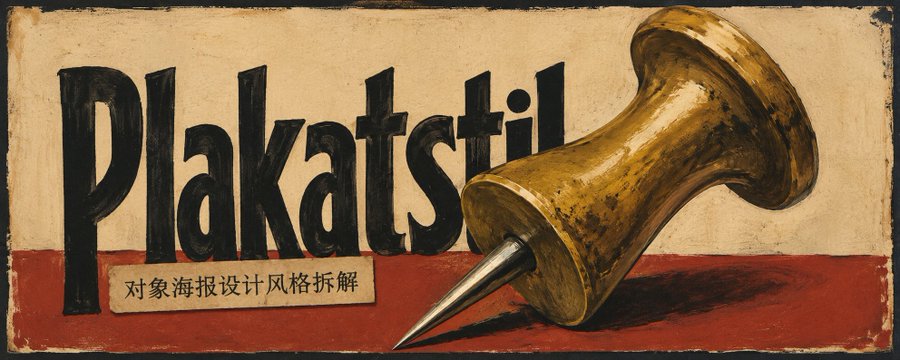
Plakatstil 风格值得拆解的地方就在这里,删掉复杂场景,删掉故事背景,删掉长文案,只保留一个被强烈简化的商品或物体,再配一个极短的名称。Plakatstil is worth breaking down because it removes the complex scene, story, and long copy, leaving one strongly simplified product or object with an extremely short name.
瑞士国际主义,也常被称为 International Typographic Style / Swiss Design,是二战后瑞士和德国设计师将现代主义平面设计进一步系统化形成的视觉传达方法。Swiss International Style, also called International Typographic Style or Swiss Design, was a visual communication method systematized by Swiss and German designers after World War II.
去过的城市,不能只躺在相册里。
做成一张能收藏、能发出去的旅行明信片
手写城市名、地标拼贴、邮票邮戳,一张顶一篇游记。Cities you have visited should not live only in a camera roll. Turn them into collectible travel postcards: handwritten city names, landmark collages, stamps, and postmarks—a single card that tells a whole travel story.
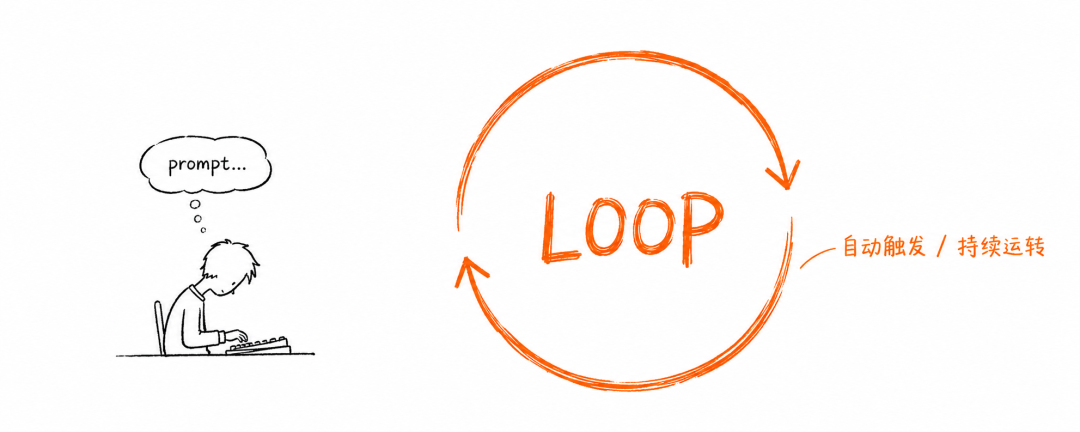
Boris Cherny 说"我不再 prompt Claude 了。我让一堆循环跑着,由它们去提示 Claude、去琢磨该干什么。我的工作变成了写循环。"Boris Cherny said, “I no longer prompt Claude. I let a set of loops run, prompting Claude and figuring out what to do. My work became writing loops.”
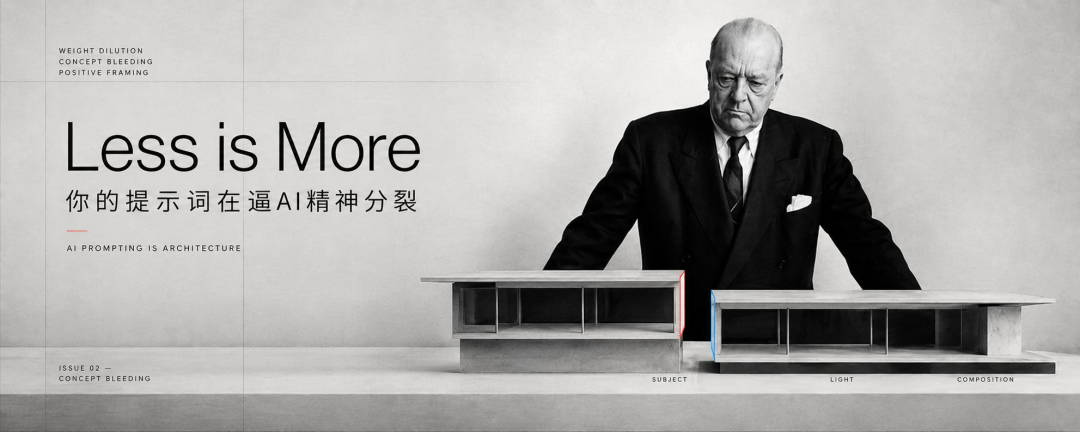
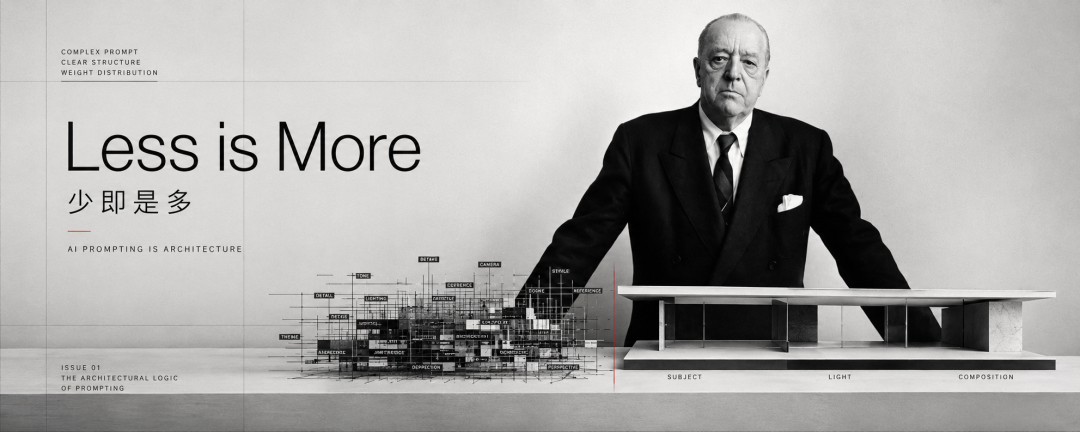
你有没有过这种经验:写了几百字的提示词,结果 AI 出的图乱七八糟:风格杂糅、画面油腻、构图四不像?Have you ever written hundreds of words of prompts only to get chaotic images from AI—mixed styles, greasy surfaces, and compositions that do not belong together?
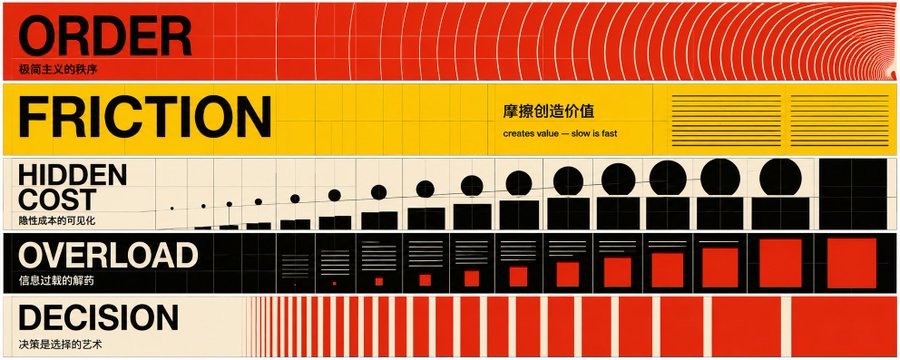
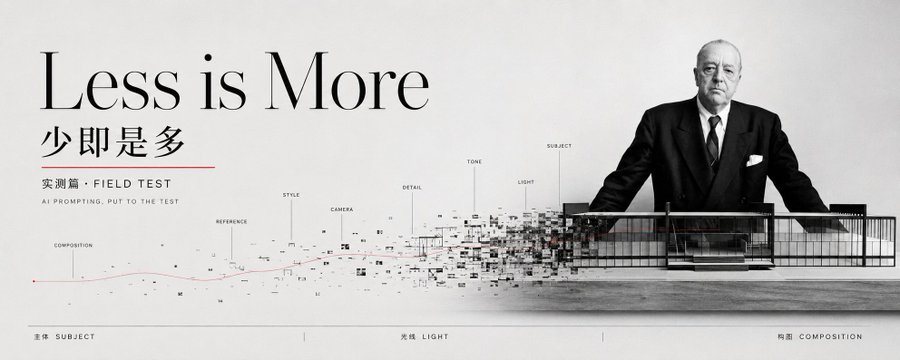
从删减、留白和比例出发,重新理解少即是多为何能成为经久不衰的设计哲学。Starting with reduction, negative space, and proportion, a fresh look at why less can become a design philosophy that lasts.
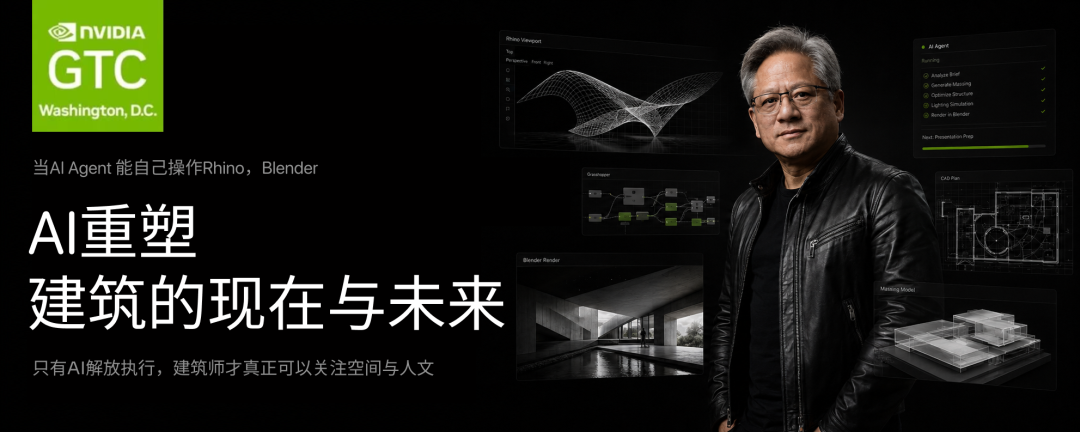
最近,黄仁勋在台北GTC演讲上演示了一个AI Agent:在演示中,Agent自己打开了Rhino,自己建模,自己调材质,自己导出到Blender,自己渲染出图。全程不需要人动鼠标键盘。At a Taipei GTC talk, Jensen Huang demonstrated an AI agent that opened Rhino, modeled, adjusted materials, exported to Blender, and rendered the result—without anyone touching a mouse or keyboard.
以前,人类都说同一种语言,于是想建一座通天塔「赞颂人类」上帝不舒服了,这不是挑战我吗,于是上帝打乱了所有人的语言。Once, humanity spoke one language and tried to build a tower reaching heaven to praise itself. God took it as a challenge and scrambled everyone’s language.
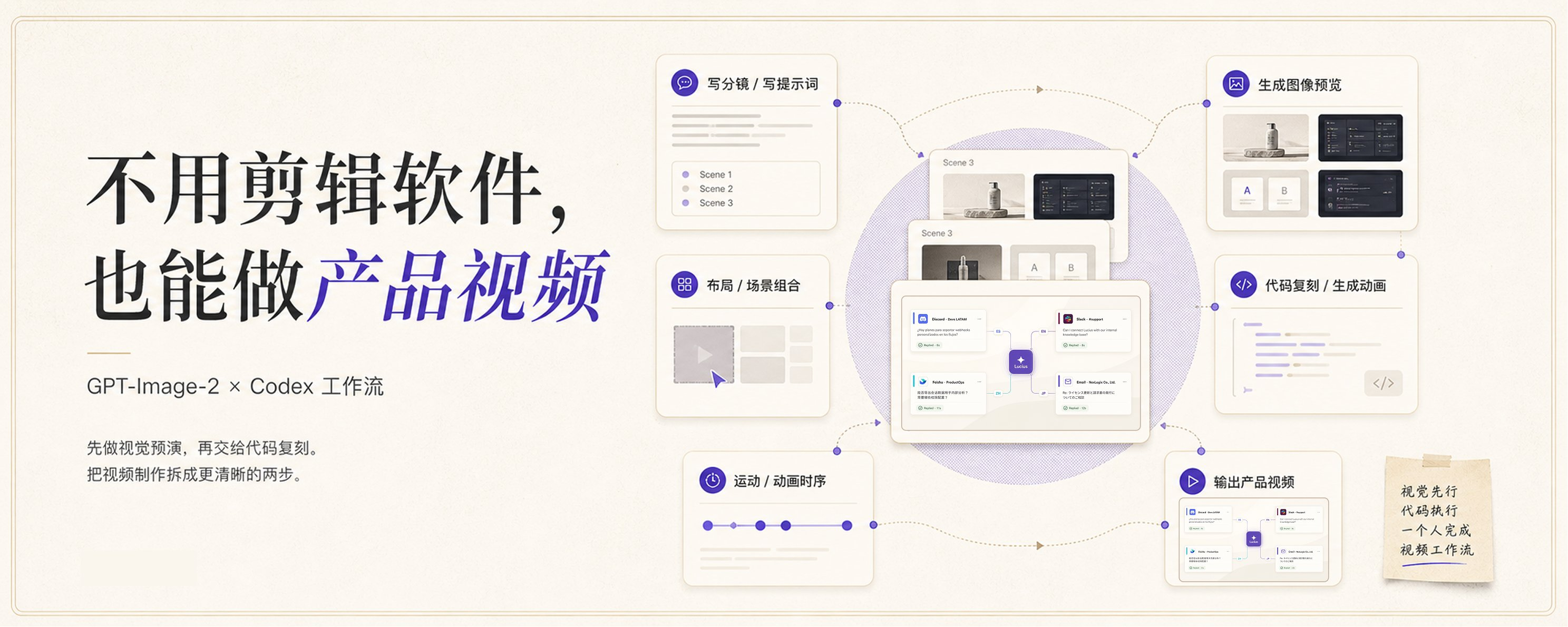
外包一个几十秒的产品视频要上万块,但我没打开任何剪辑软件,只用代码就把它跑出来了。工作流的关键在于:先用 GPT-Image-2 把每个场景的视觉预演图出好,再把图交给 Codex 复刻成代码。A few dozen seconds of product video can cost tens of thousands, but I did not open an editing app. I built it with code: first create visual previsualizations for every scene with GPT-Image-2, then hand them to Codex to reproduce in code.
增长是任何系统保持生命力最基本的方式,资本只是借走了这个词。
最根本的问题,只有这一个:你在追求什么样的增长?Growth is the most basic way any system stays alive; capital merely borrowed the word. The fundamental question is just this: what kind of growth are you pursuing?
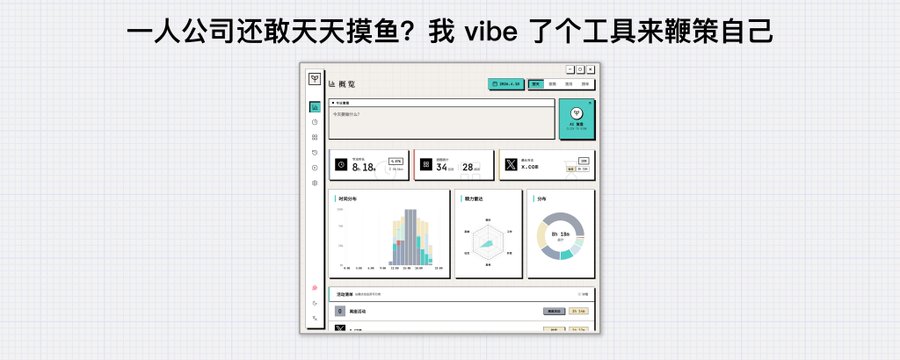
一人公司听起来很爽和自由。没有考勤,没有日报,没有老板在背后走来走去。但另一面是:也没有人替你盯着你自己。Running a one-person company sounds great and free: no time clock, daily reports, or boss pacing behind you. But there is another side: no one else is watching you either.
Agent 时代,人可能反过来成为 AI 的工具,科幻作品里其实早就给出了答案。In the agent era, people may end up becoming tools for AI. Science fiction has been giving us the answer for a long time.
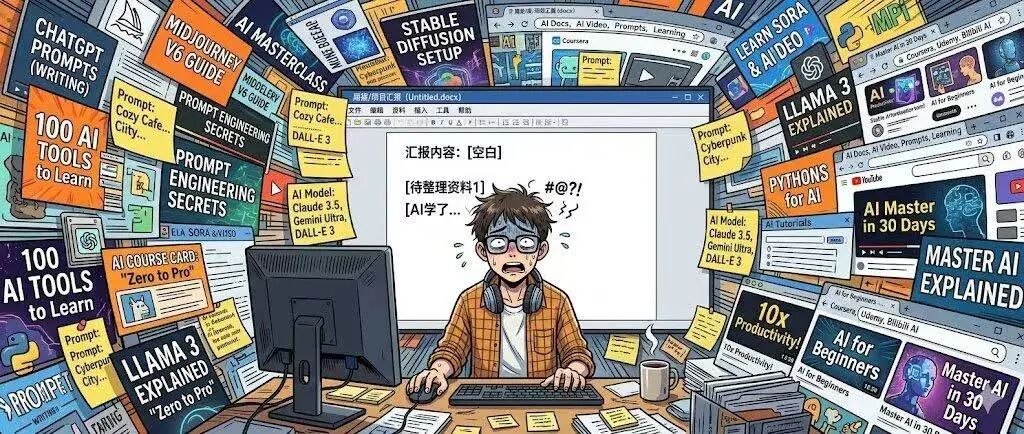
AI 明明就在收藏夹里,但根本没想到用。这才是很多人一直“学了很多,却始终用不上”的真正原因。
不是因为笨,也不是因为教程没用,而是因为你还没有养成一个最基础、但也最重要的习惯:遇到任何问题时,先想到一句,这件事,AI 能不能帮我做?AI is already sitting in your bookmarks, yet you never think to use it. That is why many people keep learning without ever applying what they learn. It is not because they are incapable or the tutorials are useless; they have not built the basic habit of asking, whenever a problem appears, whether AI can help.
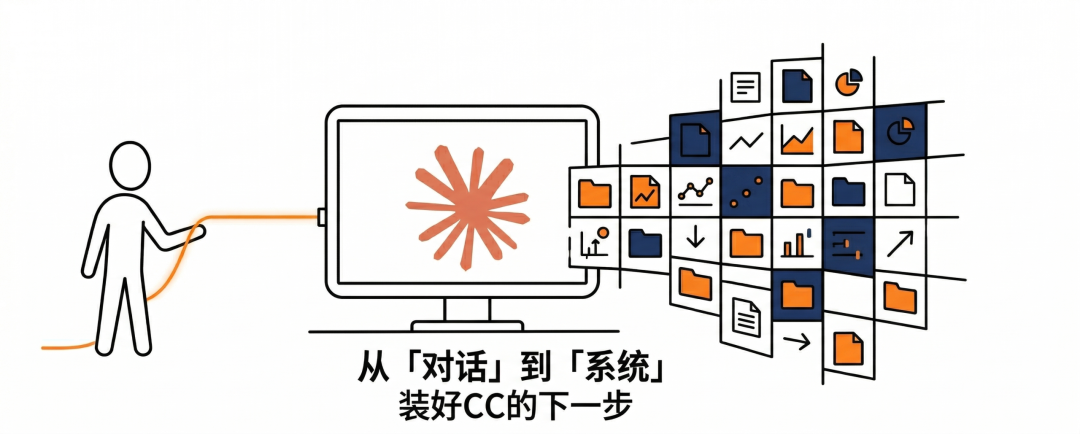
装好 Claude Code 之后,下一步该怎么办?CC 本身是空白的:它知道怎么帮你,但它不知道你是谁、在做什么、你的工作有什么规律。从"装好了"到"真正进入生产力",中间要做一件事:What comes after installing Claude Code? CC starts as a blank slate: it knows how to help, but not who you are, what you do, or the patterns in your work. Moving from “installed” to real productivity requires one thing in between:
2025 年,AI发展的速度超乎人的想象。如果说23,24年我们还在以一种娱乐态度看AI“它能不能写诗”,“能不能画明星吃面条的图片”,而发展到 2025 年,AI正式进入了“价值生成”的深水区。泡沫在左,机遇在右。AI moved faster in 2025 than most people imagined. In 2023 and 2024, we treated questions like whether AI could write poems or draw celebrities eating noodles as entertainment. In 2025, AI entered the deep waters of value creation. The bubble is on the left; opportunity is on the right.
看着这些“天才少年”,AI就好像是遍地黄金的许愿池。但切回现实,麦肯锡12月的最新重磅报告却显示:94%的企业都在用AI,但其中只有6%真正赚到了钱。These “genius teenagers” make AI look like a wishing well of gold. But McKinsey’s latest December report says 94% of companies use AI, while only 6% actually make money from it.
我在幻想着,如果这套Agent跑通了,就意味着我可以在睡觉时,让AI帮我自动通过“搬运+写文”来赚取流量收益,这不妥妥的“睡后收入”吗。I imagine that if this agent workflow worked, I could let AI automatically repurpose and write content while I sleep to earn traffic revenue—the ultimate “sleep income.”
如果我告诉你,在 2025 年,“会说话”比“会写代码”更重要呢? 这不只是一句鸡汤,而是一场正在硅谷发生的、关于“表达权”的再分配。What if, in 2025, speaking well mattered more than writing code? This is not a motivational cliché, but a real redistribution of the power to express ideas happening in Silicon Valley.
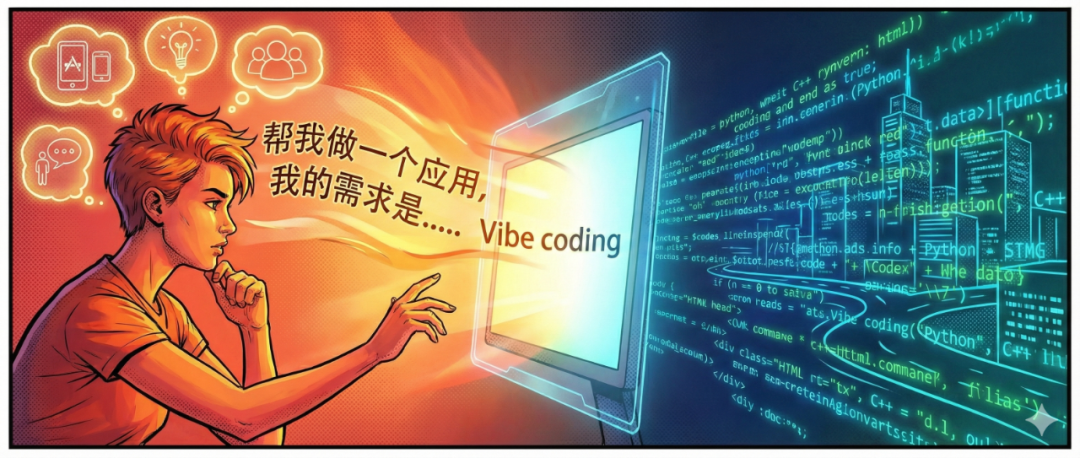
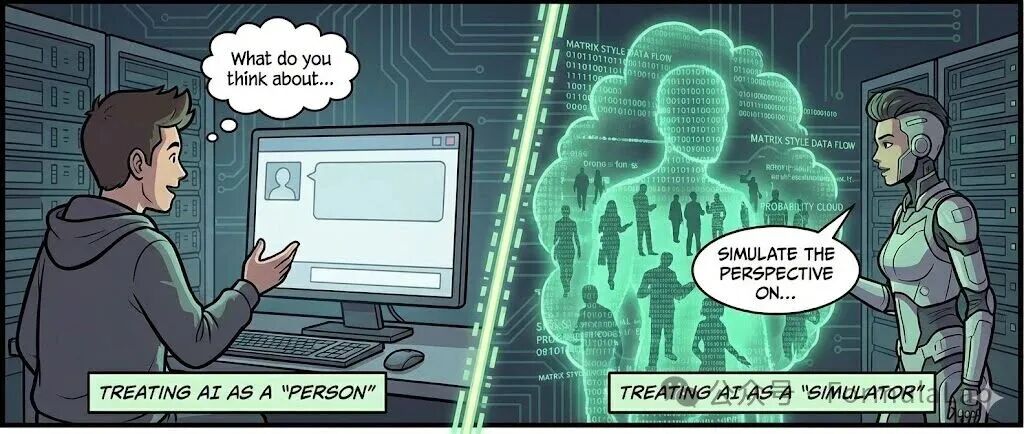
我们探讨了AI的基础概念、如何编写Prompt,还探讨了AI作为“模拟器”的本质。知道了这些固然不错,但这些难道只是为了跟AI聊天吗?AI对于我们来说就只是个聪明点的聊天助手吗?We explore AI’s basic concepts, how to write prompts, and the nature of AI as a simulator. These ideas are useful, but are they only for chatting with AI? Is AI merely a slightly smarter chat assistant?
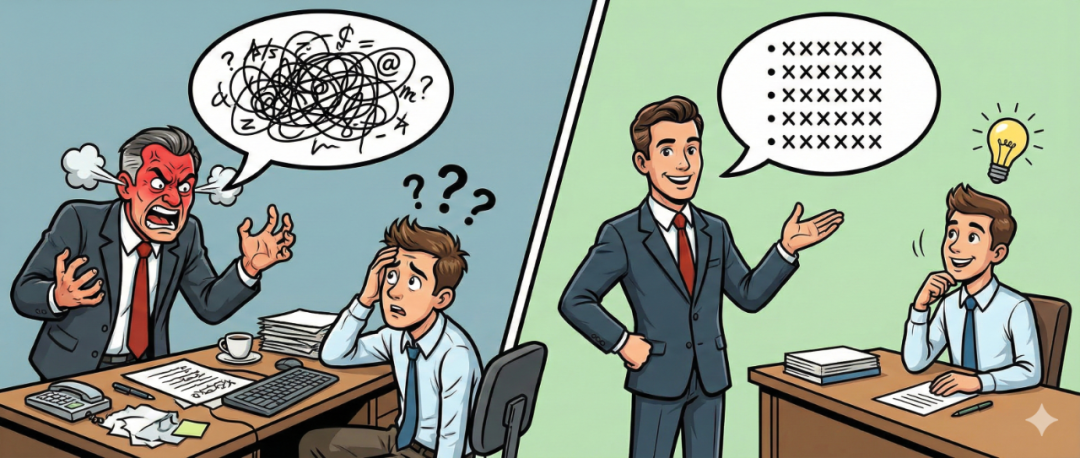
有一句话叫 “Garbage In, Garbage Out” (垃圾进,垃圾出),如果你给AI的指令模糊不清,它只能给你返回一个平庸、安全的“万金油”答案。因此详实清晰的指令是非常重要的一点。There is a saying: “Garbage In, Garbage Out.” When your instructions are vague, AI can only return a bland, safe, all-purpose answer. Clear, detailed instructions matter.
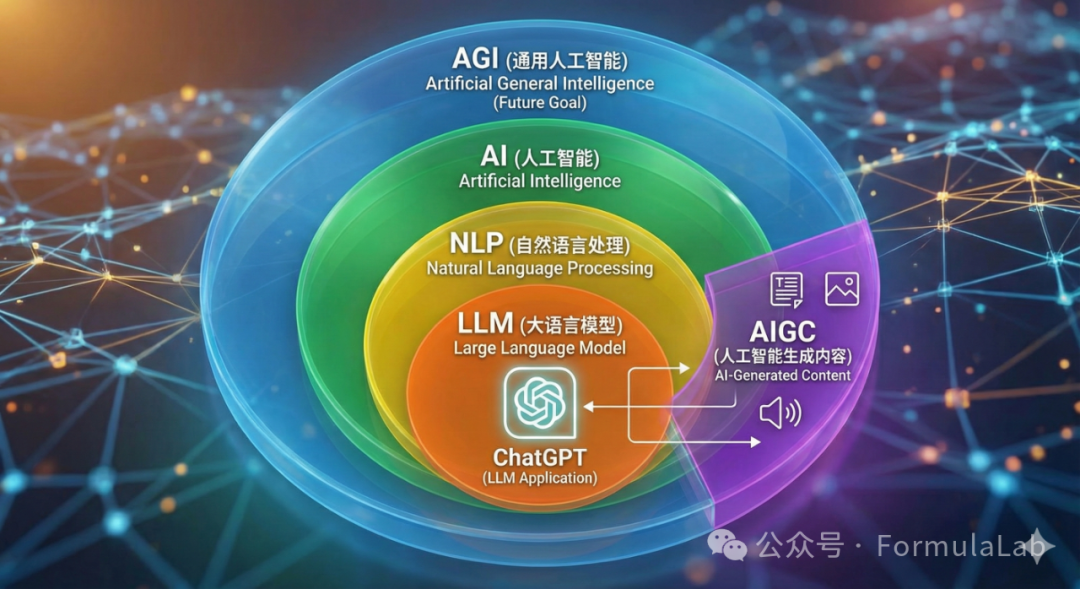
一会儿是LLM,一会儿是AIGC,还没搞懂NLP是啥,那边又在喊AGI要来了。大家都在焦虑“被AI取代”,但对大多数人来说,第一步的门槛其实是先明确概念。One day it is LLM, the next it is AIGC, and you still have not figured out NLP before everyone starts shouting about AGI. While people worry about being replaced by AI, the first hurdle for most is simply getting the concepts straight.