
SEO × GEO 增长系统SEO × GEO Growth System
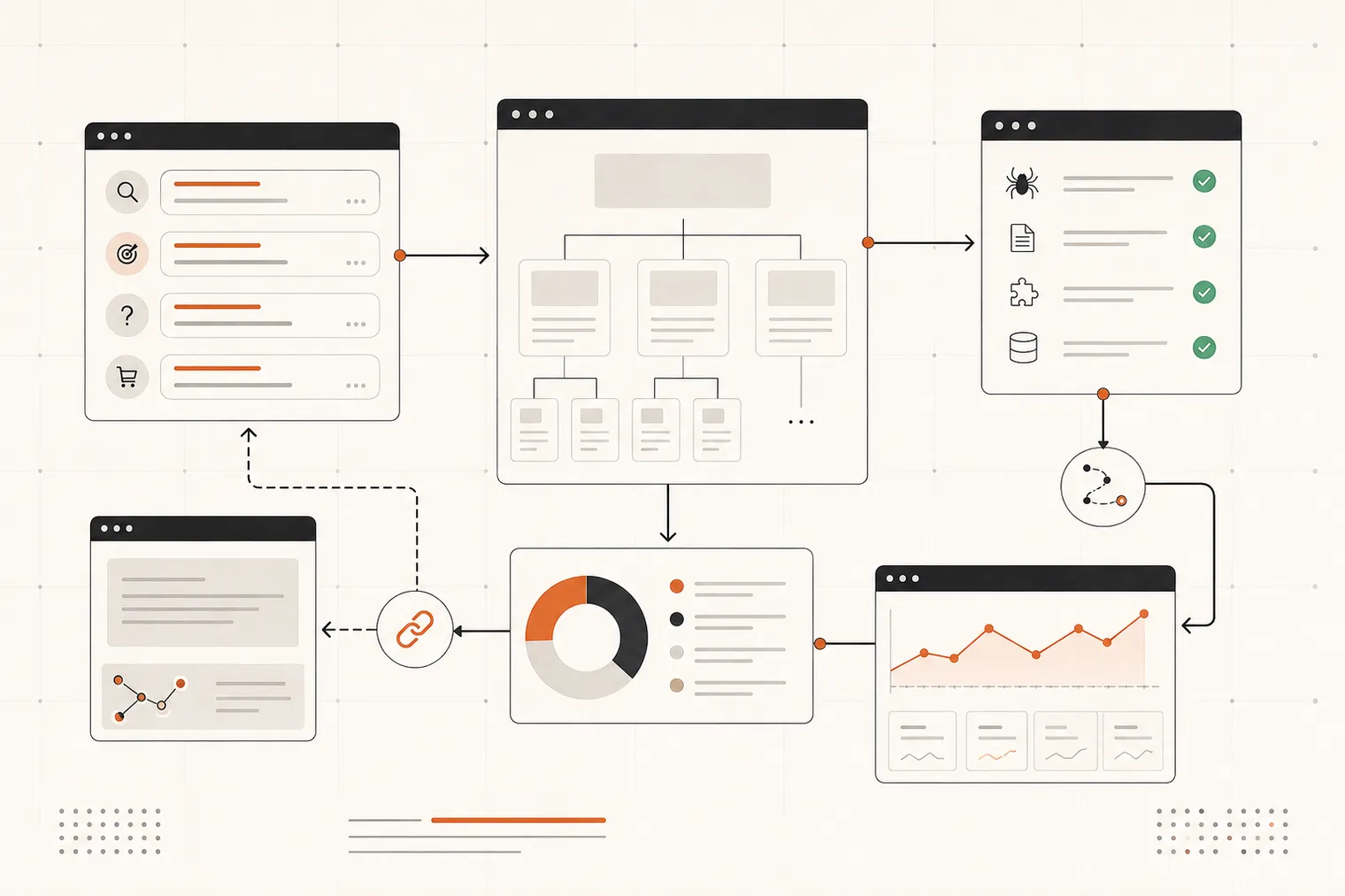
从关键词与搜索意图出发,连接内容规划、页面生产、技术 SEO、发布检查和生成式搜索可见度监测。Connects keywords and search intent with content planning, page delivery, technical SEO, release checks, and generative-search visibility monitoring.
- 关键词与意图Keywords & intent
- 内容架构Content architecture
- 技术 SEOTechnical SEO
- AI 引用可见度AI citation visibility
背景与初衷Context
SEO 关注网页在传统搜索中的抓取、索引、理解与排名,GEO 关注内容能否被生成式搜索发现、理解和引用。两者都依赖清晰的信息架构、可验证的内容、稳定的技术基础和持续测量,但衡量口径与结果路径并不完全相同。SEO addresses how pages are crawled, indexed, understood, and ranked in traditional search. GEO addresses whether generative systems can discover, understand, and cite content. Both depend on clear information architecture, verifiable content, sound technical foundations, and ongoing measurement, while their metrics and outcome paths differ.
核心痛点Problems
增加内容数量不等于获得搜索增长;缺少意图判断、技术基础、页面边界和持续复盘时,生产越快越容易重复与失焦。Publishing more content does not guarantee search growth; without intent, technical foundations, page boundaries, and review loops, faster production creates duplication and drift.
- 关键词研究、内容规划、开发和发布状态分散,难以判断每个页面承担的搜索意图。Keyword research, content planning, development, and release status fragment, obscuring the intent each page should serve.
- 相近主题容易产生内容蚕食,页面数量增加但站点结构和定位变得模糊。Adjacent topics can cannibalize one another as page count grows and site structure loses clarity.
- 排名、自然流量和 AI 引用来自不同系统,需要分别采样并持续复核。Rankings, organic traffic, and AI citations come from different systems and require separate, ongoing measurement.
处理方式Approach
以关键词与 SERP 研究确定需求和页面类型,用主题地图划分页面边界,再把内容生产、技术检查、结构化数据、内部链接、上线验收和效果监测连接起来。Use keyword and SERP research to establish demand and page type, map topic boundaries, then connect content delivery, technical checks, structured data, internal links, release QA, and measurement.
目标Goal
建立一条从需求研究到上线复盘都可追踪的搜索增长流程,让页面决策有依据、技术问题能被发现、效果变化能够解释。Build a traceable search-growth process from demand research through post-release review, so page decisions have evidence, technical issues surface, and performance changes can be interpreted.
产品设计Product design
- 根据真实搜索结果中的主导意图决定内容页、服务页、对比页或工具页。Choose content, service, comparison, or tool pages from the dominant intent visible in real search results.
- 通过主题地图、关键词归属和差异化提纲减少页面互相竞争。Reduce page competition with topic maps, keyword ownership, and differentiated briefs.
- 同时检查抓取、索引、规范链接、站点地图、结构化数据和内部链接。Review crawling, indexing, canonicals, sitemaps, structured data, and internal links together.
- 分别记录传统搜索表现和生成式搜索引用样本,不把单次结果当作稳定结论。Track traditional search performance and generative-search citation samples separately without treating one observation as a stable conclusion.
技术与实现Build notes
候选主题先经过关键词、SERP 与现有页面审计,再进入信息架构和内容制作。页面通过元数据、正文结构、链接、图片、结构化数据、可抓取性与构建检查后上线;随后结合搜索平台数据、站点分析和 AI 引用样本进行周期复盘。Candidate topics pass keyword, SERP, and existing-page review before information architecture and content production. Pages clear metadata, structure, links, images, structured data, crawlability, and build checks before release, then enter periodic review using search-platform data, site analytics, and AI-citation samples.